TOPIC (DAY 1)
“SOFA SYLLABLES”
A staff has five parallel lines and four spaces. It is enclosed by bar lines at the sides. Each line and space of the staff has a particular tone with its corresponding pitch name.
Pitch names are letter names derived from the first seven letters of the English Alphabet. The so-fa names are so-fa syllable written as do, re, mi, fa, so, la, ti, Do. These so-fa names are arranged in ascending or descending order. While thecorresponding numbers are equivalent, numbers of both so-fa names and pitch names.
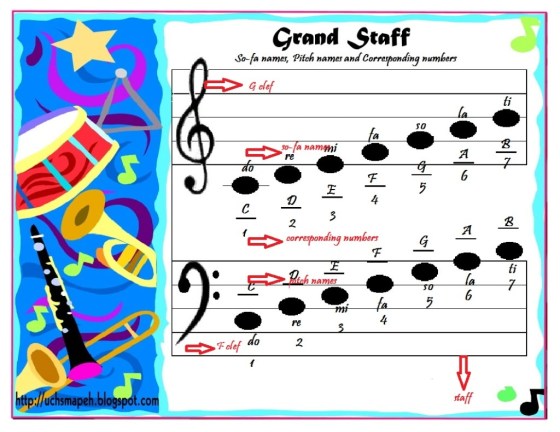
A. Pitch Names or Letter Names:
- C D E F G A B C
B. So-fa Names or So-fa Syllable:
- do re mi fa so la ti Do
C. Corresponding Numbers:
- 1 2 3 4 5 6 7 8
ACTIVITY:
Exercise 1: Play a singable note on your preferred instrument and sing the major scale on the syllables do re mi fa sol la ti do ti la sol fa mi re do up and down. In the beginning, you can play along with your instrument as you sing. Practicing this exercise you will get used to the syllables, their order and their sound within the scale. You also learn to think relatively which is a very important ability as you sing more complicated songs.
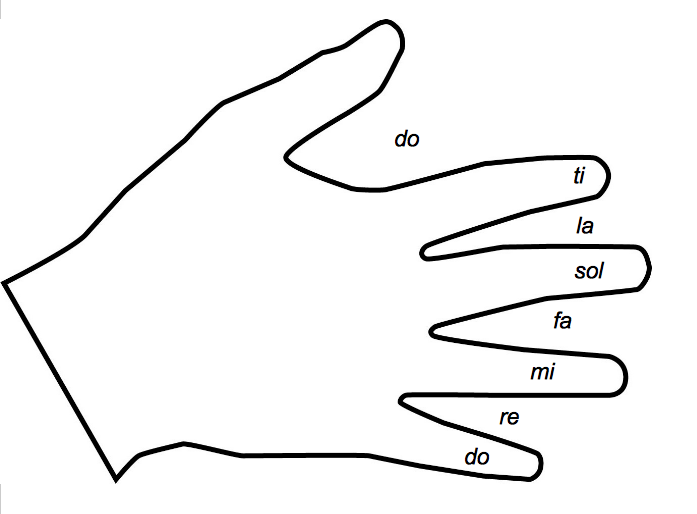
Exercise 2: You can do this exercise alone or with a partner. Take your left hand and look at your fingers. Each finger and each flap of skin between your finger stands for a syllable (see illustration). Pinky → do; Space between pinky and ring finger → re, ring finger → mi …. Define the absolute note of a syllable by the help of a tuning fork or an instrument. Now tap with your right index finger on a random finger or flap of skin between two fingers and sing the corresponding syllable with the correct pitch relative to the defined note. Vary your initial defined anchor note from time to time. Practice until you are able to find the correct notes at decent speed. If you have practiced alone until now ask, someone else to tap his fingers for you as it is more challenging
TOPIC (DAY 2)
“Do Re Mi (Solfège and Hand Signals)”
Solfège (or Do-Re-Mi) is like the alphabet for music – just as the ABC’s provide the building blocks for reading, solfège provides the building blocks for musical education. It is one of the most widely known and popular systems of teaching pitch, which brings together listening, singing and in due course, playing music. Each note of the musical scale is given a different syllable – Do, Re, Mi, Fa, So, La and Ti. With their open vowel endings, the solfège names are much easier to vocalise than traditional 8-note scale names: C-D-E-F-G-A-B-C, which have lots of sounds that strain the voice (eeee sounds). What’s more, singing letter names for a musical scale has the potential to confuse young children who are learning the alphabet in the context of language.
What is solfège for?
The idea behind the solfège system is to help develop pitch memory, which is the most basic type of musical memory. It does so by requiring the student to hear the note in their mind’s ear, thus honing their listening and aural skills. Because solfège focuses on the use of voice (rather than an instrument) it is the perfect way for young children to learn pitch naturally.
There are two types of pitch – perfect and relative pitch. Perfect pitch (also called absolute pitch) is the ability to identify or re-create a given musical note without the help of a reference tone. Famous singers with perfect pitch include Michael Jackson, Mariah Carey and Ella Fitzgerald. Relative pitchis the ability to recognize and produce pitches in relation to each other.
There are also two methods of teaching solfège – the ‘fixed do’ system and the ‘movable do’ system. The ‘fixed’ do system is based upon the C major scale and is more in line with building perfect pitch because C is always sung as “Do” and A is always sung as La etc. However, with the Movable-Do solfège system “Do” is sung as the root (first note) of the scale so any scale or key can be used, thus aiding the development of relative pitch.
Whether you use the ‘fixed do’ or ‘‘movable do’, both systems are tools for helping to develop the muscle memory for pitch, especially if you add the Curwen/Glover hand signs.
Topic ( DAY 3)
“Solfège chart showing the hand signs”
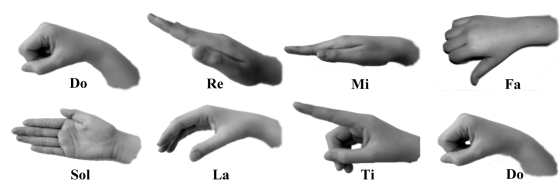
During the 1840’s, John Spencer Curwen developed hand signs to go with the solfège syllables (do re mi, etc.) based on Sarah Glover’s Manual of the Norwich Sol-fa System. Later, Hungarian pioneer of children’s music education Zoltán Kodály, adapted the hand signs slightly and integrated them into his teaching methods.
 This solfège chart show the hand signs. Hand signs allow children to actually see the height or depth of the pitch. The low “do” begins at your midsection. Each hand sign (pitch) is then made above the previous one. Thus, you have the hand signs going up when the pitch goes up. The upper “do” is at eye level. The reverse is done on the way back down and that’s a little trickier.
Some may say that the hand signs are too hard for babies and toddlers to form (they don’t yet have the fine motor skills) but I would argue that 1) when you do the hand signs for your baby he is receiving a visual cue to help develop his pitch memory and 2) his attempts to do the signs himself practices and helps develop his fine motor skills. If needed, you can even help mould your child’s hand into the do shape until he can sign do himself.
Topic (DAY 4)
“Scales, steps, and intervals and Key Signatures”

Diatonic scale in the chromatic circle
Scales are typically listed from low to high. Most scales are octave-repeating, meaning their pattern of notes is the same in every octave (the Bohlen–Pierce scale is one exception). An octave-repeating scale can be represented as a circular arrangement of pitch classes, ordered by increasing (or decreasing) pitch class. For instance, the increasing C major scale is C–D–E–F–G–A–B–[C], with the bracket indicating that the last note is an octave higher than the first note, and the decreasing C major scale is C–B–A–G–F–E–D–[C], with the bracket indicating an octave lower than the first note in the scale.
The distance between two successive notes in a scale is called a scale step.
The notes of a scale are numbered by their steps from the root of the scale. For example, in a C major scale the first note is C, the second D, the third E and so on. Two notes can also be numbered in relation to each other: C and E create an interval of a third (in this case a major third); D and F also create a third (in this case a minor third).
Scales and pitch
A single scale can be manifested at many different pitch levels. For example, a C major scale can be started at C4 (middle C; see scientific pitch notation) and ascending an octave to C5; or it could be started at C6, ascending an octave to C7. As long as all the notes can be played, the octave they take on can be altered.
Types of scale
Scales may be described according to the intervals they contain:
- for example: diatonic, chromatic, whole tone
or by the number of different pitch classes they contain:
- Octatonic (8 notes per octave): used in jazz and modern classical music
- Heptatonic (7 notes per octave): the most common modern Western scale
- Hexatonic (6 notes per octave): common in Western folk music
- Pentatonic (5 notes per octave): the anhemitonic form (lacking semitones) is common in folk music, especially in oriental music; also known as the “black note” scale
- Tetratonic (4 notes), tritonic (3 notes), and ditonic (2 notes): generally limited to prehistoric (“primitive”) music
- Monotonic (1 note): limited use in liturgy, and for effect in modern art music
“The number of the notes that make up a scale as well as the quality of the intervals between successive notes of the scale help to give the music of a culture area its peculiar sound quality.””The pitch distances or intervals among the notes of a scale tell us more about the sound of the music than does the mere number of tones.
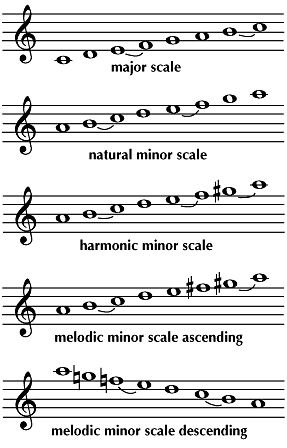
ALL MAJOR AND MINOR MUSIC SCALES:
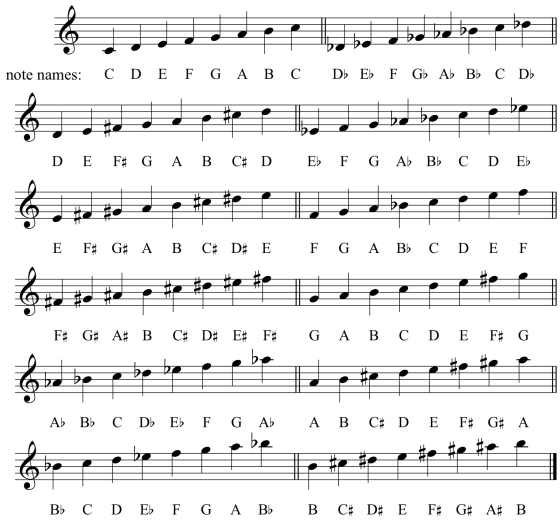
“Key Signatures”
To help understand and remember key signatures, a chart called the circle of fifths can be used. On the outside are the major key names, separated by fifths. On the inside are the corresponding minor key names. In the middle is the number and position of the sharps or flats.

There is a little trick to figuring out a key signature’s name. When confronted with a key signature that consists of flats, look at the flat second from the far right. This flat is on the line or space the key signature is named after. One flat is F, since you can’t go to the next -to-last flat. To find the name of a key signature with sharps, look at the sharp farthest to the right. The key signature is the note a half step above that last sharp.
Key signatures can specify major or minor keys. To determine the name of a minor key, find the name of the key in major and then count backwards three half steps. Remember that sharps and flats affect names.
LONG QUIZ ( DAY 5)
Encircle the correct answers.
-
Do, ti la __ __ __ __ do
-
What would a solfege three spots down from Do be?
-
 Which Solfege hand signal is this?
 -
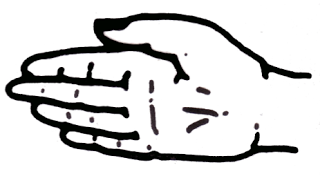 What solfege hand signal is this?
 -
Did you like this quiz?
-
How many syllables are in solfege?
-
Where is the song for solfege from?(” DOE, a deer, a female deer…”)
-
What is the solfege for the key “#” and the note is on the second line from the bottom on the staff?
-
Is the solfege scale; “do, Re, mo, fa, so ,la, ti, do?”
-

-

-

-

-

-

-

-

-

-

Test B.
 20. What is this called22. What is the solfage order left to right23. How many letters are in the solfege scake
24.
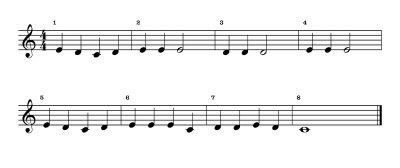 In the first row what are of solfage
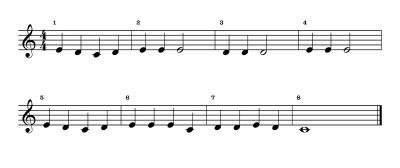 25. What is the solfege in the second row?27. What is the first 2 in solfege28. What are the first three letters in solfage29. What are the first 5 notes of solfege30. What are the first 6 notes of solfage?


 nikkapenuela.school.blog